Skip to content

framingham.com (*** TEST SITE ***)

News and local information about Framingham, MA (USA)

  • Home
    • Welcome
    • Site Map
    • Newsletter Sign-up
  • Local
    • Framingham Calendar
    • Framingham Weather
    • Framingham History
    • Framingham Organizations
    • Maps u0026 Transportation
    • Framingham Books
    • Framingham Cable TV
    • Downtown Framingham
    • Framingham Heart Study
    • More Local Links…
  • News
    • Around Town
    • Arts / Culture
    • General Interest
    • Business
    • Health u0026 Fitness
    • Home u0026 Garden
    • Politics
    • Public Meetings
    • Schools u0026 Education
    • Seniors
    • Technology
  • Business
    • Business Directory
    • Shopping Guides
    • Shop Route 9
    • Shop Saxonville
    • Shop Downtown
    • Shop Nobscot
    • Real Estate Guide
    • Dining Guide
    • Coupons and Savings
    • Coupon Book
  • Schools
    • Schools/Education
    • Homework Help
    • FHS-TV
  • Living
    • Health u0026 Wellness
    • Kids Pages
    • Seniors
    • Recreation
    • Religion
    • Collector’s Corner
    • New England Travel
    • Sports
    • Ski New England
  • GOV
    • Town Government
    • State Government
    • Federal Government
  • Help
    • Ask framingham.com
    • Privacy Policy
    • Contact Us
    • Advertising Info
  • European Fire Ants

    European Fire Ants
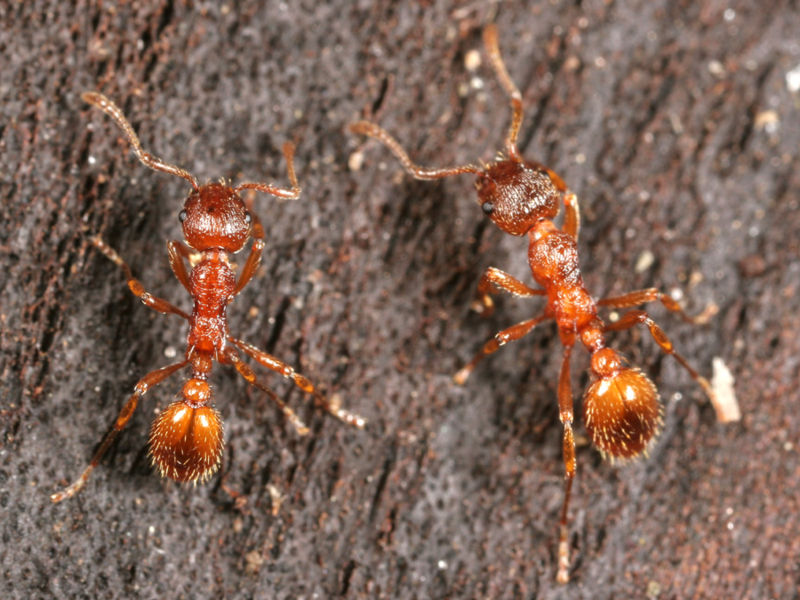
    PHOTO - Myrmica Rubra (European Fire Ant)
    Myrmica Rubra (European Fire Ant). Photo courtesy of Gary Alpert at en.wikipedia

    FRAMINGHAM, MA – Professor Eldridge Adams studies the “behavioral and population ecology of social insects” at the University of Connecticut. Working with Wen Chen, a Ph.D student, Adams is researching the spread of Myrmica rubra, or the European Fire Ant which is part of the INANE, (“INvasive Ants of New England”) project.

    Adams contacted Darren Guertin, (Framingham’s Conservation Agent), asking that people, especially those involved with nature centers, wildlife sanctuaries, and similar organizations report any sighting of the ants.

    The ants are red in color with a darker shade of red to the head.  They primarily live under fallen trees, stones and in the soil.  They build colonies which consists of many nesting sites with up to 100 queens.  Considered an invasive species, the aggressive European Fire Ant eats many other types of [native] insect and will attack anything that disturbs their nests.

    Adams describes the ant as “more aggressive towards people than the native [red] ants of New England”, and notes the ants are more prone to attack and bite than to scatter and run if you encounter them.

    For more info on Professor Adams and his insect research projects visit his web pages at U. Conn, (http://hydrodictyon.eeb.uconn.edu/people/adams/)

    To report a sighting, (or “biting”), contact Framingham Conservation Agent, Darren Guertin by email at: dag@framinghamma.gov or by phone at (508) 532-5460 M-F  9:00am – 5:00pm, or (508) 400-6797 nights and weekends.

    ###

    Randy Harris

    June 10, 2010
    General Interest
    ecology, environment, fire ants, framingham, insects, red ants

Proudly Powered by WordPress